Key Takeaways:-
- Commercial EV charging is shifting from a competitive advantage to a business necessity as electric vehicle adoption accelerates worldwide.
- Installing charging infrastructure improves customer experience, employee satisfaction, and long-term property value simultaneously.
- Early adoption helps businesses stay ahead of regulations, sustainability goals, and evolving consumer expectations.
- Smart charging solutions allow companies to manage energy efficiently while generating new revenue opportunities.
- Businesses investing now are better positioned for growth, resilience, and brand leadership in 2026 and beyond.
- FAQs
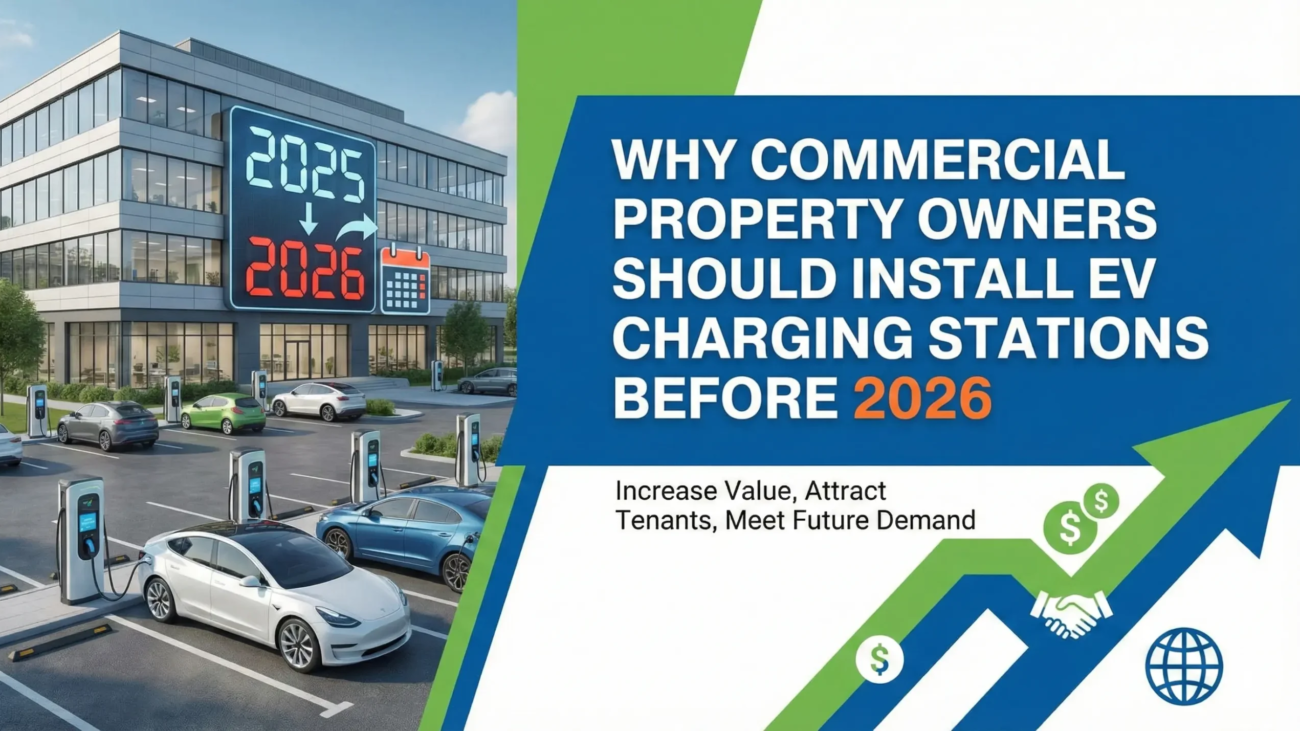
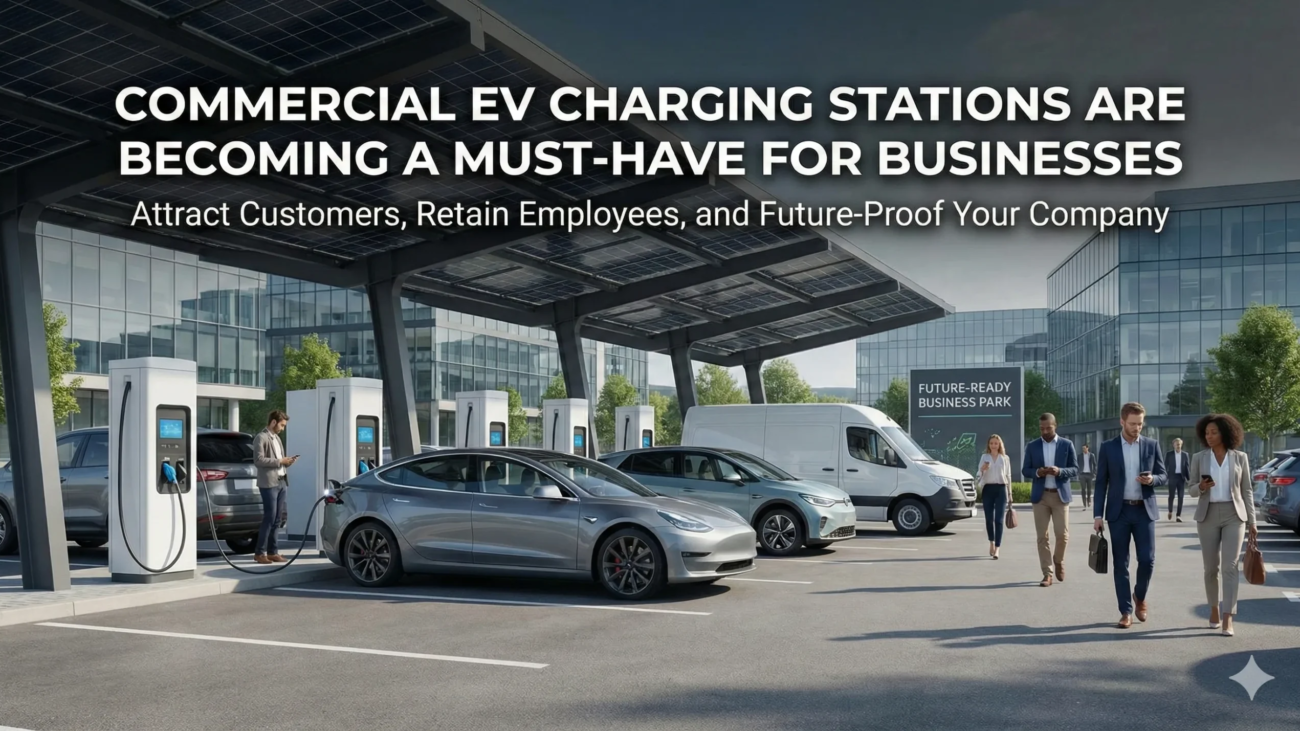
The global transition toward electric mobility is no longer a distant forecast. It is a reality that is reshaping how businesses think about infrastructure, customer experience, and long-term growth. In 2026, companies are facing stronger pressure from consumers, governments, and market forces to adapt quickly. Among the most visible changes is the growing demand for on-site electric vehicle charging. Installing a commercial EV charging station is no longer viewed as a luxury feature. Instead, it is becoming a practical necessity for businesses that want to remain relevant, competitive, and future-ready in a rapidly evolving economy.
Acceleration of Electric Vehicle Adoption
Electric vehicle adoption has surged over the past few years, and the momentum shows no signs of slowing in 2026. More drivers are choosing electric cars because of lower operating costs, improved battery range, and expanding charging networks. As EV ownership becomes mainstream, drivers naturally expect charging access wherever they work, shop, or stay. Businesses that fail to recognize this shift risk falling behind. An EV charging station helps bridge the gap between growing demand and limited public infrastructure, ensuring that customers and employees are never left searching for power.
Changing Consumer Expectations in a Digital-First World
Modern consumers are more informed and selective than ever before. They actively seek out businesses that align with their lifestyle choices and values. Sustainability, convenience, and innovation now play a major role in purchasing decisions. When customers see charging stations at a commercial property, it sends a clear message that the business understands modern needs. Providing EV chargers for business locations improves dwell time, builds trust, and creates a positive brand impression. These subtle signals often influence where customers choose to spend their time and money.
EV Charging as a Competitive Business Advantage
In crowded markets, small advantages can make a significant difference. Businesses that invest early in EV charging infrastructure gain a clear edge over competitors who delay adoption. Charging stations attract EV-driving customers who may otherwise choose a different location. Over time, this translates into higher foot traffic and increased revenue opportunities. Installing EV chargers also positions a company as forward-thinking. This perception is especially valuable in industries where innovation and customer experience directly impact long-term success.
Role of Workplace Charging in Employee Retention
Employee expectations have evolved alongside consumer behavior. Many professionals now consider sustainability initiatives when evaluating employers. Offering on-site charging is a practical benefit that supports employees who drive electric vehicles. It reduces daily stress and commuting costs while reinforcing a company’s commitment to modern workplace standards. A well-planned EV charging station can improve employee satisfaction and retention. In 2026, businesses that prioritize practical benefits alongside competitive salaries are more likely to attract top talent in competitive labor markets.
Financial Incentives and Long-Term Cost Efficiency
One of the most compelling reasons businesses are adopting EV charging infrastructure is the improving financial outlook. Government incentives, tax credits, and utility rebates have reduced upfront installation costs in many regions. Beyond incentives, charging stations can generate long-term returns through usage fees, increased customer visits, and enhanced property value. When paired with smart energy management, EV charger locations can be operated efficiently without overwhelming electrical systems. Over time, the financial benefits often outweigh the initial investment.
Supporting Sustainability and Corporate Responsibility Goals
Environmental responsibility is no longer optional for modern businesses. Investors, partners, and customers increasingly evaluate companies based on their sustainability commitments. Installing EV charging stations directly supports emissions reduction and clean energy adoption. A commercial EV charging station demonstrates measurable action rather than empty promises. In 2026, transparency matters. Businesses that integrate visible sustainability solutions into their operations strengthen credibility and align themselves with global climate goals, which can improve public perception and long-term brand value.
Preparing Commercial Properties for the Future
Commercial properties are transforming as mobility needs change. Parking lots and garages are no longer static spaces. They are becoming active service areas that support new technologies. Property owners who invest in EV charging today are future-proofing their assets. As EV adoption continues to rise, properties without charging access may lose appeal. Installing EV chargers for properties ensures long-term relevance and adaptability, protecting investments against shifting market expectations and regulatory changes.
Integration with Smart Energy and Technology Systems
Modern EV charging solutions are designed to integrate seamlessly with existing energy and management systems. Smart chargers allow businesses to monitor usage, manage load balancing, and optimize energy consumption. This level of control is especially important as electricity demand grows. A well-integrated EV charging station supports operational efficiency while minimizing strain on infrastructure. In 2026, businesses that adopt smart solutions gain better visibility into energy usage and can make informed decisions that support growth.
Strengthening Brand Image Through Visible Innovation
Brand perception is shaped by visible actions, not marketing slogans alone. EV charging stations are highly visible symbols of innovation and responsibility. Customers notice them immediately, and the message is clear. Businesses that install EV chargers for business environments signal that they are invested in progress. This perception builds trust and loyalty over time. In competitive industries, a strong brand image supported by tangible initiatives often influences customer choice more than traditional advertising.
Meeting Regulatory and Policy Expectations
Governments worldwide are introducing stricter regulations to support electric mobility. Building codes, zoning requirements, and sustainability mandates are increasingly favoring EV-ready infrastructure. Businesses that act early avoid rushed compliance later. A commercial charging station helps organizations stay ahead of regulatory changes while demonstrating proactive planning. In 2026, compliance is not just about avoiding penalties. It is about positioning a business as responsible and aligned with broader societal goals.
Enhancing Customer Experience Across Industries
From retail centers to hotels and office complexes, EV charging enhances the overall customer experience. Drivers appreciate the convenience of charging while they shop, dine, or work. This added value encourages longer visits and repeat business. Installing EV chargers for use creates a seamless experience that aligns with modern lifestyles. In an era where experience often outweighs price, small conveniences can have a lasting impact on customer loyalty and satisfaction.
FAQs
Why are commercial EV charging stations important for businesses in 2026?
They meet rising EV demand, attract modern customers, support employees, and help businesses stay competitive while aligning with sustainability and regulatory expectations.
Do commercial EV charging stations increase business revenue?
Yes, they can increase foot traffic, dwell time, repeat visits, and property value while creating opportunities for direct or indirect revenue generation.
Are EV charging stations expensive to install for businesses?
Costs vary, but incentives, tax credits, and long-term operational benefits often offset initial expenses significantly.
Which businesses benefit most from EV charging stations?
Retail centers, offices, hotels, healthcare facilities, and mixed-use properties benefit the most due to frequent and extended visitor parking.
By 2026, commercial EV charging will no longer be an optional upgrade. It is a strategic necessity driven by consumer demand, employee expectations, financial incentives, and regulatory pressure. Install reliable EV charging stations with Zeus Super Stations and future-proof your business with expert design, installation, and ongoing support. Contact them today via email or call 778-347-3331 for expert consultation, fast installation, and long-term support.