
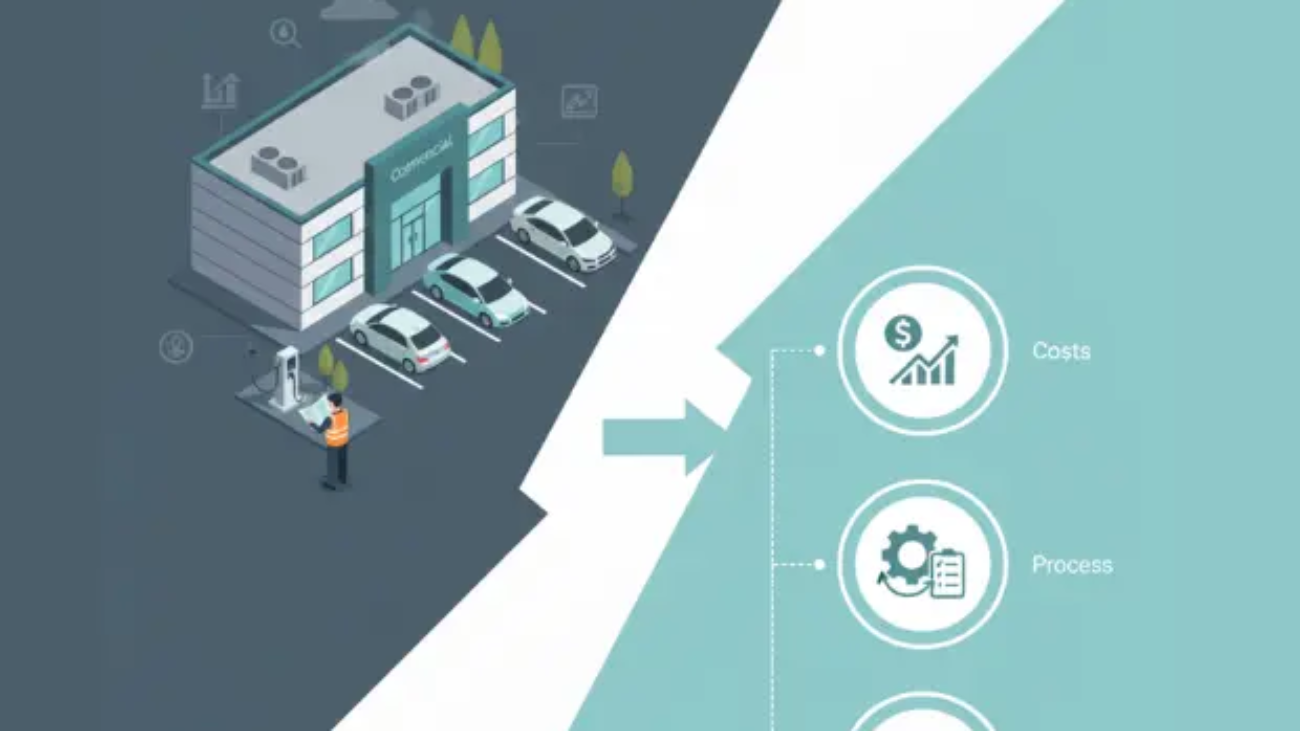
Key Takeaways:-
- EV charger installation costs vary, but incentives reduce barriers, improving ROI.
- Businesses attract eco-conscious customers by offering modern charging solutions.
- Charging stations generate direct fees and boost customer spending.
- Property value increases with future-ready infrastructure like EV chargers.
- Early adoption secures competitiveness in the growing electric mobility market.
- FAQs
The transition to electric mobility is reshaping the way businesses operate and the services they provide. With more drivers switching to electric vehicles, the demand for charging infrastructure has grown exponentially. For companies, installing charging stations is no longer just an optional sustainability measure. It has become a crucial investment that can generate revenue, improve brand image, and attract customers.
Importance of EV Charger Installation
Electric vehicles have become a common sight on roads worldwide. The shift is being driven by government policies, environmental awareness, and the financial savings EVs offer in the long term. However, the widespread adoption of electric vehicles depends heavily on charging infrastructure. Businesses that take the lead in offering charging facilities position themselves at the forefront of this transformation.
For commercial property owners, the decision to invest in charging stations is about more than convenience. It is a way to create new revenue opportunities, improve customer satisfaction, and show commitment to sustainability. This is where commercial EV charging station installation plays a pivotal role in shaping future growth.
Costs of Commercial EV Charger Installation
One of the first questions businesses ask is about the cost of installation. The total expense depends on several factors, such as the type of charger, the number of stations, electrical capacity, and site conditions. Basic Level 2 chargers typically cost less to install compared to fast DC chargers, but they serve different needs.
On average, the cost of installing a Level 2 charger ranges between a few thousand dollars, while DC fast chargers can cost significantly more, sometimes reaching six figures. Additional expenses may include electrical upgrades, trenching, permits, and software integration for payment systems. Despite these costs, many businesses find the investment worthwhile due to government incentives, rebates, and the long-term financial returns generated by increased customer engagement and usage fees.
Another factor influencing cost is scalability. Some businesses may start with a small number of chargers and expand as demand increases. This phased approach helps spread out costs while ensuring that future growth is manageable.
Process of Installing Commercial EV Chargers
The installation process involves several steps, each of which requires careful planning and execution. The first step is conducting a site assessment. Professionals evaluate the electrical capacity, parking layout, and potential customer demand. This ensures the system installed is both functional and future-ready.
After the site assessment, businesses must obtain permits and approvals from local authorities. These vary by region but generally cover safety, compliance with electrical codes, and, in some cases, zoning regulations. Once permits are secured, the electrical infrastructure is prepared. This may involve upgrading panels, installing conduits, or even adding transformers for higher-capacity systems.
With the infrastructure in place, the actual chargers are installed. They are then connected to the power source and tested for safety and performance. In addition, most modern systems include software platforms that allow businesses to monitor usage, set pricing, and control access. The final step involves inspection and approval by regulatory bodies to ensure everything complies with standards.
Benefits of Commercial EV Charger Installation
The advantages of investing in charging stations extend far beyond revenue generation. For businesses, the installation signals commitment to sustainability and innovation. Customers increasingly choose businesses that align with their environmental values. By providing charging facilities, companies show they are forward-thinking and customer-focused.
From a financial perspective, charging stations can create multiple revenue streams. Direct income comes from usage fees. Indirectly, businesses see higher customer spending, as drivers are likely to shop, dine, or stay longer while charging their vehicles. Over time, this increased engagement can significantly boost profitability.
Property owners also benefit by increasing the value and appeal of their locations. A commercial building equipped with charging stations is more attractive to tenants and buyers who are looking for modern, future-ready spaces. For hotels and retail outlets, the presence of chargers can directly influence a customer’s decision to visit or book.
Government Incentives and Support
Governments around the world are actively encouraging businesses to install charging infrastructure. Incentives range from tax credits and rebates to grants that cover a substantial portion of installation costs. These programs significantly lower the initial investment and make adoption easier for businesses of all sizes.
In many regions, utility companies also provide support in the form of discounted rates, infrastructure upgrades, or shared revenue models. By combining government incentives with utility support, businesses can make installation highly cost-effective and shorten the payback period.
Challenges and How to Overcome Them
While the benefits are clear, businesses may face challenges when considering installation. High upfront costs, uncertainty about future demand, and navigating regulatory requirements are common concerns. However, most of these challenges can be mitigated with careful planning.
Working with experienced installers ensures compliance and smooth execution. Exploring financing options, such as leases or partnerships, can reduce financial pressure. Furthermore, adopting scalable solutions allows businesses to start small and expand as demand grows.
Role of Technology in EV Charger Installation
Modern charging systems are more than just hardware. They incorporate advanced technology for management, monitoring, and customer interaction. Businesses can use software platforms to track usage data, manage pricing, and even integrate loyalty programs. These digital tools enhance the customer experience while giving businesses valuable insights for strategic decision-making.
Smart chargers also allow remote monitoring and diagnostics. This minimizes downtime and ensures reliability, which is crucial for maintaining customer trust. As technology continues to evolve, the capabilities of charging systems will only improve, offering businesses even greater flexibility and control.
Long-Term Outlook for Businesses
The adoption of electric vehicles is expected to grow rapidly in the coming years. For businesses, installing charging stations now is an investment in the future. It ensures competitiveness and relevance in a market where customer expectations are shifting quickly.
Over time, the presence of chargers will no longer be an optional service but a necessary feature, much like Wi-Fi in public spaces. Companies that invest early will benefit from first-mover advantages, such as brand loyalty and market leadership.
FAQs
How much does commercial EV charger installation cost?
Costs vary by charger type, site conditions, and infrastructure needs. Level 2 chargers are more affordable, while DC fast chargers require a higher investment. Incentives help reduce overall expenses.
What permits are required for installation?
Permits depend on local regulations, but typically include electrical compliance, safety approvals, and zoning clearances. Professional installers help streamline this process.
Do government incentives significantly reduce costs?
Yes, many governments offer rebates, tax credits, or grants that cover a large portion of installation costs, making adoption more financially accessible for businesses.
How do businesses benefit beyond revenue?
Apart from charging fees, businesses gain customer loyalty, improved sustainability reputation, and higher property value, ensuring long-term growth and competitiveness.
The shift to electric mobility presents immense opportunities for businesses willing to adapt. By investing in commercial EV charger installation, companies not only generate new revenue streams but also strengthen their brand, attract loyal customers, and prepare for a sustainable future. The costs involved are offset by incentives and long-term returns, while the process, though detailed, is manageable with the right partners.
Don’t wait to future-proof your business. Start your commercial EV charger installation journey today and unlock new revenue opportunities, attract eco-conscious customers, and increase property value. Take the first step toward a smarter, sustainable future now. Call us today at 778-347-3331 or email us to schedule your free consultation.